
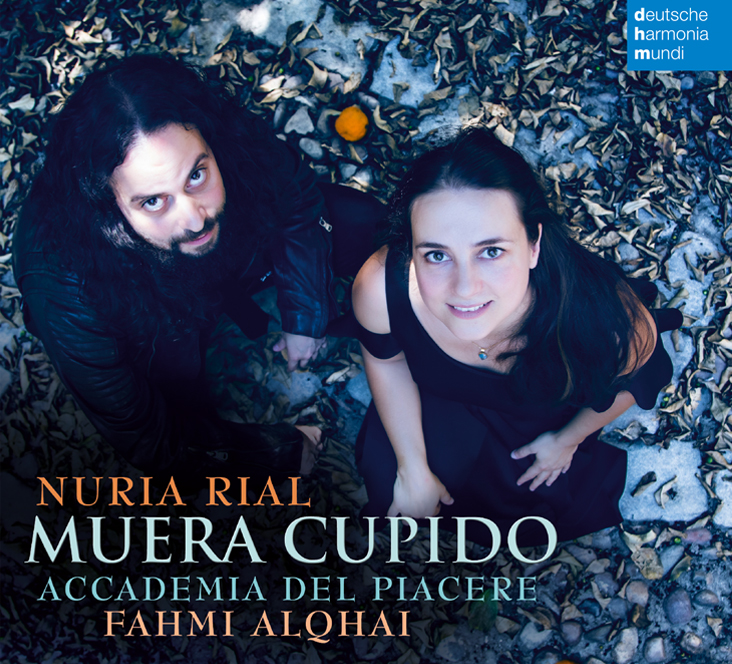
Muera Cupido
- Pavana . Francisco Guerau (1649-approx.1722), arranged by Fahmi Alqhai
- Y, pues consentir no debo. Recitado
- Yo hermosísima Ninfa. Aria from “El imposible mayor en amor le vence Amor” atributted to Sebastián Durón (1660-1716) and José de Torres (ca. 1670-1738)
- Quantos teméis al rigor. Arietta ytaliana – Rezitado [Brioso] – [Vibo] from “Las nuevas armas de Amor” Sebastián Durón
- Marionas. Fahmi Alqhai
- Pastorella che tra le selve. (Ms. 2245 of Biblioteca Nacional de España) Giovanni Bononcini (1670-1747)
- All’assalto de pensieri. Cantada (Ms. 2246 of Biblioteca Nacional de España) Anonymous
- Xácara. Francisco Guerau, arranged by Fahmi Alqhai
- Sosieguen, descansen. Solo humano, from “Salir el Amor del Mundo” Sebastián Durón
- Selva Florida. Aria from “Viento es la dicha de Amor” José de Nebra (1702-1768)
- Fandango. José de Nebra & Improvisation
- Tempestad grande, amigo. Fandango from “Vendado es amor, no es ciego” José de Nebra
- Adiós, prenda de mi amor. Aria from “Amor aumenta el valor” José de Nebra
Fahmi Alqhai — viola da gamba & musical direction
Nuria Rial — sopran
ACCADEMIA DEL PIACERE
Rodney Prada — quinton
Johanna Rose — viola da gamba
Rami Alqhai — violone
Carles Blanch — baroque guitar
Javier Núñez — harpsichord
Around 1700, Spanish music stood at a crossroads. For centuries, it had followed its own path—rhythmic, syllabic, and deeply tied to popular forms and theatre. With the arrival of the Bourbon dynasty, however, Italian musical style—marked by virtuosic arias, dramatic recitatives, and rich instrumental writing—began to reshape Spanish taste.
This programme explores that moment of transformation. Works by Sebastián Durón and José de Nebra showcase the meeting of old and new: traditional Spanish forms like the seguidilla and fandango blending with the “fire and fury” of Italian baroque. Arias and cantatas are framed by instrumental dances and improvisations, echoing Spain’s theatrical golden age.
Muera Cupido is both a farewell to an older tradition and a passionate embrace of a new, hybrid musical language—where popular song, courtly elegance, and operatic drama collide.